
1 Month Old Sleep Schedule: Wake Windows, Naps & Bedtime Routine

Congratulations on surviving the first few weeks of parenthood! If you’re here, you’re probably running coffee and wondering when life will start to feel predictable again. At one month old, babies have moved out of the complete unpredictability of the newborn sleep schedule but are still adjusting to life outside the womb. They may be more alert, start grabbing at toys, and enjoy a little more active wake time, but sleep is still the main event.
This guide will cover everything you need to know about your one month old’s sleep routine, including sample sleep schedules, naps, wake windows, safe sleep practices, bedtime routines, regressions, and even when to start thinking about sleep training. (Hint: not yet, but if baby’s still not on a schedule in 3-4 months, let’s talk.).
If you’re exhausted and need immediate support, our team offers in-home overnight newborn care so you can finally get some rest, or even daytime shifts to help you with naptime routines, postpartum support and more).
What does a 1 month old’s daytime & overnight sleep look like?
When your baby is only one month old, it’s too soon to follow a strict “sleep schedule.” At this stage, the goal is to help your baby get enough rest by keeping them well-fed and preventing overtiredness. While you might not see the exact same patterns every day, you’ll start to notice gentle rhythms forming and can help guide them to strengthen those patterns.
Sample 1 Month Old Sleep Schedule
Like adults, each baby is unique in their natural habits and rhythms. Combine that with a few-hour ideal bedtime window and individual family routines, and that leads to babies having differing wake and bedtimes even on similar daytime routines. With that in mind, here are two examples of what a one-month-old’s sleep schedule might look like, depending on whether your baby is a morning bird or a night owl.
Early Riser
- 6:00am – Wake, feed, short activity
- 7:00am – Nap 1
- 9:00am – Wake, feed, activity
- 10:00am – Nap 2
- 11:00am – Wake, feed, activity
- 12:30pm – Nap 3
- 2:30pm – Wake, feed, activity
- 4:00pm – Nap 4
- 5:00pm – Wake, feed, activity
- 6:30pm – Bedtime
Later Riser
- 8:00am – Wake, feed, short activity
- 9:00am – Nap 1
- 10:00am – Wake, feed, activity
- 11:30am – Nap 2
- 1:00pm – Wake, feed, activity
- 2:00pm – Nap 3
- 4:00pm – Wake, feed, activity
- 5:30pm – Nap 5
- 6:30pm – Wake, feed, activity
- 8:00pm – Bedtime
How long should one month babies sleep?
A one-month old typically sleeps about 14–17 hours total in a 24-hours period. These hours are spread across 4-6 naps and 2-4 stretches of night sleep, broken up by regular feedings.
Struggling with sleep during the day and at night? Our 24-hour newborn care can help you find the right balance.

1 Month Old Wake Windows & Daily Routine
You’ve probably already heard the term “wake window,” but you might still be confused about what that actually means. A wake window is the amount of time that a baby can/should comfortably stay awake between periods of sleep. In many cases, babies will begin to show signs of tiredness toward the end of the wake window but still need help fully falling sleep.
At one month old, wake windows are usually 45–60 minutes (but some babies may be able to comfortably stay awake up to 90 minutes depending on the time of day and how their other naps have been). This short time is enough for a feeding, diaper change, and maybe one simple activity. Sticking to wake windows helps prevent your baby from becoming overtired, which can make falling (and staying) asleep much harder. Plus, playtime and wake-window activities have a direct impact on naps.
It’s common for the first wake window of the day to be the shortest, with the longest coming directly before bedtime for increased sleepiness, but some babies are pretty consistent throughout the day or have the longest wake window in the morning after a good night’s sleep.
For more on structuring your day, we can help explain what Eat Play Sleep is all about. If early morning wake ups are disrupting your family, we can also offer tips for Fixing Early Morning Wake Ups.
Activities for daytime fun with newborns
At one month old, “playtime” can feel a little funny. After all, your baby isn’t exactly ready to join you for a game of peekaboo or build a block tower just yet. But these early moments of interaction are actually laying the foundation for big developmental growth. Every song you hum, face you make, or high-contrast card you show is helping your baby strengthen motor skills, develop eyesight and coordination, and build vital connections in their brain. Think of playtime right now as exercise for their growing mind and body: simple, short, and surprisingly powerful.
Here are a few easy ways to “play” with your one-month-old:
- Tummy time for short bursts
- Gentle stretches and bicycle legs
- Singing or soft music
- High-contrast toys or books
- Simply walking around and narrating your day
Safe Sleep Habits for # Month Olds
- Back sleeping — continue even as baby starts rolling.
- Rolling milestones — once rolling both ways, swaddles should stop.
- Swaddling & sleep sacks — what’s safe now.
- Dressing for sleep — temperature, layers.
- Pacifier use: Should I use a pacifier with my newborn?
- Internal link: Safe Sleep Practices.
As always, safe sleep is a critical part of setting up sleep habits. Remember, the National Institute of Health highlights the following safe sleep guidelines:
- Back sleeping: Always place your baby on their back to sleep.
- Rolling milestones: If your baby starts rolling both ways (rare at this age), swaddles should stop.
- Swaddling & sleep sacks: Swaddling is safe for now as long as your baby is placed on their back. Sleep sacks are another safe option, but most babies still struggle with their startle reflex at this age.
- Dressing for sleep: Babies should typically be dressed in one more layer than you would wear. It’s important to balance clothing with a comfortable room temperature to avoid overheating in warmer homes/areas.
- Pacifier use: If you’re using a pacifier with your little one, you’ll be excited to learn that they may reduce the risk of SIDS. If you’re still on the fence about using a pacifier, you can learn more in our guide: Should I use a pacifier with my newborn?
Wanting to dive a little deeper? We have a guide to help you brush up on Safe Newborn Sleep Practices.
Nap Schedule for a 1 Month Old
Believe it or not, better nights often begin with better naps., and the best way to improve naps is to start by learning more about them ! Naps are usually still frequent and variable in length at this age. At one month, babies usually nap 4–6 times a day, lasting between 30 minutes and 2 hours.
How long should naps be for a 1 month old?
At one month, naps typically last anywhere from 30min-2hrs. We typically recommend capping naps at 2 or 2.5hrs to avoid day/night confusion. Newborn sleep cycles last about 30min, so nap length depends on how many sleep cycles a baby can connect.
How many naps should my 1 month old take?
On average, expect 4-6 naps spread throughout the day.
How do I know when to drop a nap?
At this stage, you won’t be intentionally working to drop a nap. Instead, you’ll work to help your baby get better at connecting sleep cycles. In response, their naps will start to lengthen and consolidate.
To become a nap expert, you can explore our Napping 101 guide.
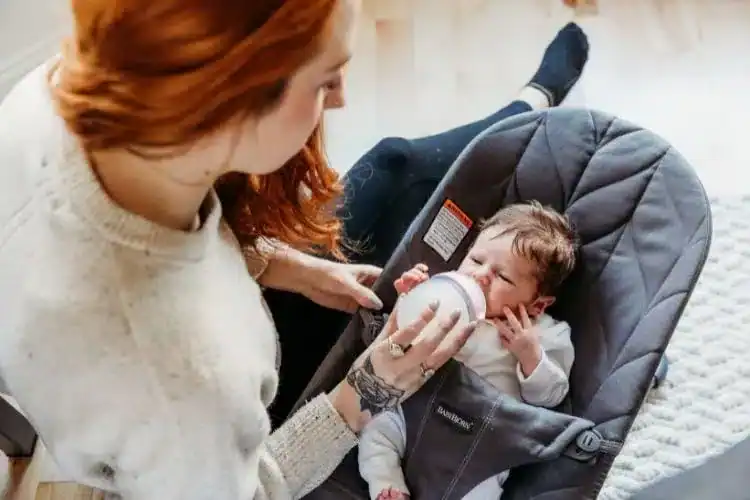
Feeding & Sleep at 1 Months
As your baby grows and settles into new routines, feeding is still the main driver of their sleep.
- Daytime feeds: Expect 8 or more feedings in 24 hours, with usually about two-thirds of those occurring during the day.
- Night feeds: Most babies still wake 1–3 times at night for feeds
- Feeding and sleep stretches: As your baby grows and gains weight, they may start consolidating sleep with longer nighttime stretches.
Remember, the frequency and duration of feedings will vary depending on whether you’re nursing, using only bottles, feeding formula, using pumped breastmilk, or doing a combination. Think of it like this, the routine of a baby coming home on a NICU eating calorie-enhanced formula on a feeding schedule is going to look completely different from a full-term baby coming home and nursing on demand. Whatever works best for you and baby is perfectly okay. Looking to nurse or pump and still get some extra sleep? Our team can support you with both Overnight Newborn Care & Breastfeeding, so you can rest while meeting your feeding goals.
What is a Good Bedtime for a 1 Month Old?
While the first few nights at home with a newborn often have nights starting later, bedtime at one month generally ranges from 6pm to 9pm. The most important factor is watching for sleepy cues: rubbing eyes, yawning, staring off, or fussiness. Missing the window can lead to overtiredness, which makes bedtime harder.
If you haven’t already worked on setting a bedtime, this can often be made easier by choosing a wake-up time just about 12 hours before bedtime and getting baby up around that time each day.
1 Month Old Bedtime Routine
An effective, soothing bedtime routine can look as simple as:
- Bath or wipe-down and lotion
- Pajamas and swaddle
- Short book or song
- Last feed before bed
- Cuddle and bed
When it comes to routines, consistency is key. If bedtime feels like a struggle, our Overnight Newborn Care team can help you find a rhythm that actually works.
The 1 Month Sleep Regression
While there’s no true regression at this age, babies may start to fight sleep as they become more alert and social. Increased brain activity and curiosity can make it harder to disengage and settle, which can make having more control over their sleep environment incredibly helpful. Specifically, things like sound machines with multiple settings and blackout curtains that can be opened and closed can allow you to gradually taper baby down into sleep. For some babies, a sudden drop in light can signal that separation is coming and trigger a fussy response. Others might adjust quickly and then need additional darkening or an increase in sound machine volume to push them further into drowsiness. Whatever tools you have at your disposal, the more control you have the better. In most cases, it’s helpful to reduce how much socialization you’re giving baby heading into sleep time; think reduced eye contact, a softer voice, and less overall stimulation.
We can help you learn more about Baby Sleep Regressions, and if your family is struggling with a sudden change in sleep habits, our Newborn Care Specialists and Postpartum Doulas are here to help.
Can I Sleep Train my 1 Month Old Baby?
At one month old, babies are too young for formal sleep training. What you can do now is set a foundation, which we call sleep conditioning or sleep shaping. Right from the start, you can focus on safe sleep, setting up consistent routines with positive sleep associations, and practicing putting your baby down drowsy but awake to give them a chance to practice drifting off on their own.
If you’re curious about gentle strategies, see our guide on How To Gently Sleep Train A Newborn Baby (Without Crying Yourself To Sleep), and our Sleep Training Services are available when your baby is developmentally ready (usually after the 4-month sleep regression).
Frequently asked questions about sleep schedules for [age]
Looking for quick answers? Here’s our rapid-fire guide to sleep at one month old.
How many naps should a 1 month old take? 4–6 naps in 24 hours.
How long should naps last? 30 minutes to 2 hours.
When do babies sleep through the night? Some babies begin to do longer overnight stretches by 6–12 weeks, but at 1 month most still wake for feeds every 3-6 hours.
What time should a 1 month old go to bed? Usually between 6pm and 9pm.
Do all babies go through the 1 month regression? While it’s not an official regression, many babies become more alert around this time and need more reduced stimulation at sleep times.
What if my baby’s schedule doesn’t match this one? That is completely normal. Every baby is unique, and schedules are meant as a guide. At this age, you want to focus on routines and patterns over strict schedules.
For more support, explore our services: Overnight Newborn Care, 24-Hour Newborn care, and Sleep Training Services.

Helpful tips from your team at Well Supported Family.
Expert postpartum and newborn advice you can trust.
Since 2016, Well Supported Family has walked alongside thousands of new parents as they adjust to life with a newborn. Our certified Postpartum Doulas and Newborn Care Specialists offer daytime, overnight, and 24/7 in-home care across the United States, bringing steady, knowledgeable support right to your door. If you’re recovering from birth, navigating feeding, or simply overwhelmed by the lack of sleep, we’re here to make those early days feel a little lighter.
Want to explore in-home care for your new family? Reach out today.