
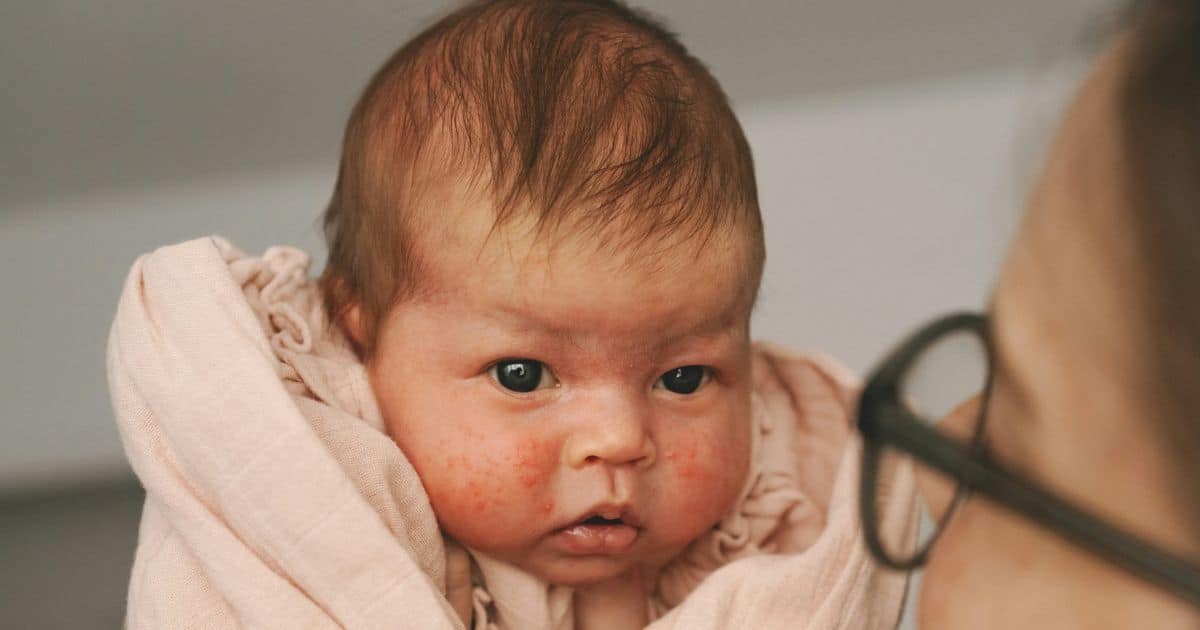
If there’s something red and bumpy on your baby’s face, you aren’t alone. Bumps or pimples are common, affecting 20 to 30% of newborns. New parents may wonder about what to do if and when baby acne appears on their newborn’s face, what natural treatments they can use, and when to see a doctor.
What is Baby Acne?
There are two types of baby acne.
Newborn:
This type of acne is harmless and appears as a bumpy red rash. It is either present at birth or appears within three weeks of life. It appears naturally. It can be visually upsetting for parents [because we all worry about anything that could bother our baby], but they typically do not feel it. It will go away without leaving scars.
Infantile:
Infantile acne appears within the first three to six months of life. This type of acne can be caused by skin irritants such as laundry detergent, soap and other skin care products, as well as eczema or infections.
Diagnosis
According to The Mayo Clinic, baby acne is diagnosed visually. This can be by parents, health care providers or often a professional working in your home overnight who has experience with infant skin conditions.
It is important to note that not all facial irritation is linked to baby acne. Acne appears as small red and white bumps on the cheeks, nose and forehead. It can also appear to have white material within the bumps.
Is that red bumpy skin acne, or just a rash? Rashes VS Acne
If your baby has skin that looks raised with white spots in the middle, it is most likely acne, but if you notice red skin, flaky or irritated patches, or a rash that comes and goes, it may be one of the conditions below.
- Eczema: Red, dry, and itchy patches that can also be scaly, crusty, or oozing. It often appears on the face in the first 6 months and can later develop on the knees and elbows.
- Heat Rash: Small red or pink pimples that often appear on the head, neck, or shoulders when a baby is dressed too warmly or is in hot weather.
- Drool Rash: Red, irritated, and sometimes flaky patches around the mouth, chin, and neck that occur from constant wetness.
- Allergic Reaction/Contact Dermatitis: Red, inflamed, and itchy patches that can appear suddenly after exposure to a new soap, lotion, detergent, or fabric.
If you are worried your baby may be experiencing something other than acne, please reach out directly to your pediatrician.
Treatment and Care for Baby Acne:
With newborn acne, there is little to do other than let the skin clear in its own time. You may gently wash the affected areas with warm water and non-scented soap to keep it clean. The acne should resolve within a few weeks or months. There is no evidence that infant acne will lead to acne later in life.
If your baby is experiencing infantile acne, reaching out to your healthcare provider is the first step. If you have begun using any new products, immediately stop to see if they are causing an issue. Using baby safe products without harsh chemicals can help avoid infantile acne from the start.
It is recommended that you do not try to pop or squeeze any acne that appears on your child’s body.
If your baby’s acne seems to irritate them or affect their quality of life (ie, scratched open pimples, acne near eyes or mouth) immediately reach out to your pediatrician.
How a Newborn Care Specialist can Help
It can be scary not knowing the ins and outs of baby skin care. Even the most seasoned parents can often find themselves second guessing or even worse, late night googling, about their decisions in regards to taking care of their little one. That’s why having an experienced professional in your home overnight, during the day or even having 24/7 live-in care can help put your mind at ease.
They say it takes a village to raise a child, but they never really specify what that village should show up for. We are here to support you in any and all capacities from your first day home from the hospital through all the little and big moments.
Baby Acne FAQ:
What are the causes of baby acne?
Baby acne is likely caused by hormones from the mother passed to the baby during pregnancy, or by a type of yeast commonly found on the skin.
My baby has pimples on their face and/or chest, is that normal?
Yes! It is normal for babies to have pimples on their face and chest. If it appears elsewhere on the body, contact your pediatrician to confirm it’s not another, similar looking condition.
Should I put breastmilk on the baby’s acne?
There is no harm in putting breastmilk on baby acne, but there is no scientific evidence that it helps clear the acne. Make sure to apply with clean hands using a cotton ball and freshly expressed milk.
How long does baby acne last?
Baby acne can last anywhere from a few weeks to a few months. Most cases clear on their own by four months of age.
Should I pop baby zits?
No, you should never pop baby zits, a hands off approach is the best way to take care of baby acne. Popping baby zits can cause irritation, scarring or infection.
What’s the treatment for baby acne?
To treat baby acne, you can gently wash the affected area with warm water and pat the skin dry or let it air dry. Avoid using scented products, lotions or oils that could clog the pores, and try to never scrub the area, to prevent scarring.

Helpful tips from your team at Well Supported Family.
Expert postpartum and newborn advice you can trust.
Since 2016, Well Supported Family has walked alongside thousands of new parents as they adjust to life with a newborn. Our certified Postpartum Doulas and Newborn Care Specialists offer daytime, overnight, and 24/7 in-home care across the United States, bringing steady, knowledgeable support right to your door. If you’re recovering from birth, navigating feeding, or simply overwhelmed by the lack of sleep, we’re here to make those early days feel a little lighter.
Want to explore in-home care for your new family? Reach out today.