
How to Become a Newborn Care Specialist

Are you passionate about caring for newborns and supporting new parents? If so, becoming a Newborn Care Specialist [NCS] could be the perfect fit for you! This type of work offers a unique chance to make a meaningful difference to families during one of their most critical and vulnerable periods of their lives.
Becoming a Newborn Care Specialist offers the opportunity to support new parents during a critical time, helping to create a well-supported family environment from the very beginning.
What Exactly is a Newborn Care Specialist?
A Newborn Care Specialist is a highly trained expert dedicated to providing exceptional care for newborns and invaluable support to new parents during those early months. Unlike traditional nannies, NCSs focus solely on newborn care, bringing specialized knowledge and skills to help families navigate the joys and challenges of early parenthood.
If your passion is supporting new families vs taking care of newborns, you might want to consider becoming a Postpartum Doula. [Learn more about the differences between a Newborn Care Specialist and a Postpartum Doula.]
What to Expect from the Job as a Newborn Care Specialist:
As a Newborn Care Specialist, your role typically includes:
- Providing in-home support to newborns and their parents
- Being up to date on relevant products, recalls, safe sleep guidelines, and safe recommendations
- Assisting with feeding, including breastfeeding support, formula preparation, triple feeding, side-lying feeding, paced feeding, etc.
- Establishing soothing sleep routines and sleep conditioning
- Offering guidance on infant care and development
- Diapering, umbilical cord, and circumcision care
- Keeping the nursery and baby’s spaces clean and tidy, and washing and sterilizing bottles and pump Parts.
- Troubleshooting common newborn issues like colic, reflux, or red flags of other potential allergies or illnesses, and recommending an appropriate referral.
On Overnight shifts:
- Providing overnight care so parents can catch up on much-needed rest
- Establishing longer stretches of sleep
On daytime or 24/7 shifts:
- Organizing the baby’s space and supplies
- Laundering all items related to the newborn [even those that were used with the parents]
- Bathing the newborn
- Errands or baby-related household tasks
- Light meal prep
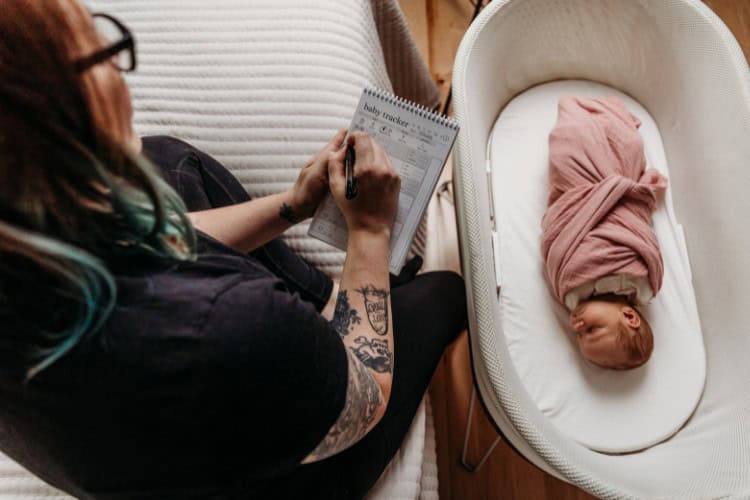
What does an NCS actually do on an overnight shift?
- Arrives 9-10pm, checks in with parents, reviews baby’s day
- Takes over all feedings, burping, diaper changes, soothing
- Logs feeding times, sleep windows, diaper output
- Maintains safe sleep environment at every transfer
- Preps bottles, washes pump parts, restocks nursery
- Gives parents a full handoff report in the morning
For a more detailed description, check out What Does a Night Nurse Do Overnight? and A Day in the Life of a 24/7 Night Nurse.
How Do I get Trained as a Newborn Care Specialist?
Industry leaders are currently still working on regulating the NCS industry. The gold standard is choosing a course that has been reviewed and accredited by the Newborn Care Specialist Association. If you are interested in getting trained as a Newborn Care Specialist, you can review their list of approved courses. These programs should cover essential topics like infant development, feeding techniques, sleep training, and newborn health.
We strongly recommend against taking a Newborn Care Specialist Course through an agency or an organization not listed here. There is no way of determining the quality of the information in the course. It might also limit the jobs that you can apply for, and you likely will not be eligible to pursue certification if the course is not reputable.
You should also be up to date on CPR to provide safe care for newborns.
Many Newborn Care Specialists also pursue additional certifications in areas like lactation, sleep training, multiples, or perinatal mental health. The NCSA has a list of recommended courses on their website.
Steps to Become a Newborn Care Specialist!
- Pursue Specialized Training: Join an accredited Newborn Care Specialist training program.
- Obtain Certifications: Complete your CPR and First Aid certifications, and consider earning additional specialized certifications to boost your expertise.
- Gain Experience: Start by working with infants and families to build a strong foundation of practical skills. Some individuals will work in the infant room in a daycare, others will find families in Facebook groups or care.com. Many begin their experience as nannies. Some individuals will offer a reduced rate when gaining experience in exchange for a reference. Some agencies will work with those who are just starting out as well.
- Network and Build Your Reputation: Connect with other professionals in the field and seek mentorship opportunities to enhance your career journey.
- Develop Your Business Skills: As many NCSs work as independent contractors, learning about business management, including invoicing and tax responsibilities, is crucial.
- Once trained and experienced, you might want to consider working for an agency! Our agency, Well Supported Family, would love to talk to you! We place team members all over the US!
Career Outlook
The demand for knowledgeable and experienced Newborn Care Specialists is on the rise! Families are starting to recognize the benefits of the service.
Some benefits of an NCS:
- Competitive pay, often exceeding traditional nanny roles
- Opportunities to work with a variety of families
- The chance to travel
- A fulfilling career helping families during such an important time
- Most Newborn Care Specialists choose to be independent contractors, who have control of what services and hours they are comfortable providing
- FLEXIBILITY. Whether you want to work 1x a week or 7x a week, if you want to offer days, nights, or 24/7s, 4-hour shifts or 20-hour shifts ~ there is a job out there for you!
Frequently Asked Questions about Becoming a Newborn Care Specialist
Do you have to be a nurse to be a Newborn Care Specialist?
No. Despite the informal term “night nurse,” a Newborn Care Specialist is not required to be a registered nurse or hold any medical license. NCSs are trained through accredited newborn care programs and certified through organizations like the Newborn Care Specialist Association (NCSA). Some NCSs do hold nursing credentials, which can be valuable for higher-needs clients, but it is not a requirement for certification or employment.
What do Newborn Care Specialists do?
A Newborn Care Specialist provides professional in-home support for newborns and their families, typically during overnight or 24/7 shifts. Their responsibilities include feeding, burping, diaper changes, soothing, and safe sleep practices — as well as logging feeding and sleep patterns, preparing bottles, washing pump parts, and giving parents a full handoff each morning. NCSs also provide guidance on establishing healthy sleep routines and supporting the overall early parenting transition.
How can I become an infant caregiver?
Most paths into infant caregiving begin with completing an accredited newborn care or postpartum doula training program, obtaining CPR and First Aid certification, and building hands-on experience with newborns. Certification through a recognized organization like the NCSA adds credibility and opens doors to agency placement. Working with an established newborn care agency is one of the most reliable ways to build a consistent client base and access professional support as you grow in the role.
How long does it to become a Newborn Care Specialist?
Training programs vary in length but most accredited NCS courses can be completed in a few weeks to a few months, depending on format and pace. After completing training, building the hands-on experience hours required for certification typically takes several months of active work with families. Many NCSs begin taking clients while completing their certification requirements
Conclusion
Becoming a Newborn Care Specialist presents a unique and rewarding career path for anyone passionate about infant care. While the journey requires dedication and continuous learning, the joy of supporting new families and nurturing newborns is truly immeasurable. If you’re ready to take the next step in your childcare career, consider diving into the world of Newborn Care Specialists—you might just discover your true calling!
Still unsure! One of our recruiters would be happy to spend time chatting with you about recommendations and solutions.

Helpful tips from your team at Well Supported Family.
Expert postpartum and newborn advice you can trust.
Since 2016, Well Supported Family has walked alongside thousands of new parents as they adjust to life with a newborn. Our certified Postpartum Doulas and Newborn Care Specialists offer daytime, overnight, and 24/7 in-home care across the United States, bringing steady, knowledgeable support right to your door. If you’re recovering from birth, navigating feeding, or simply overwhelmed by the lack of sleep, we’re here to make those early days feel a little lighter.
Want to explore in-home care for your new family? Reach out today.