
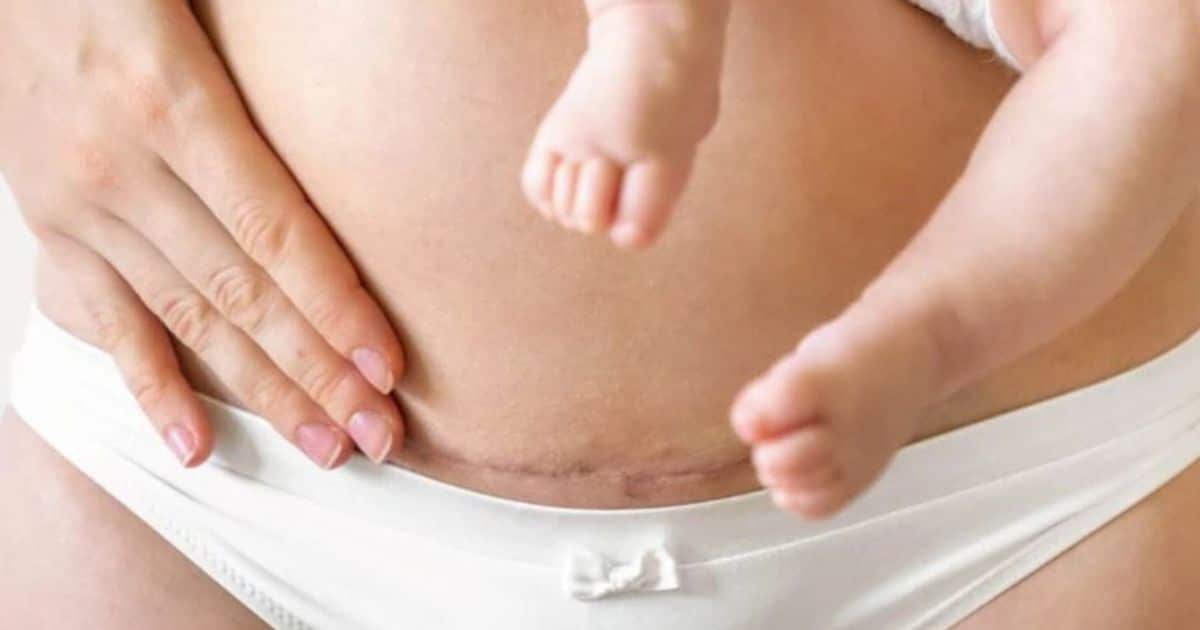
There is a quiet reality many parents aren’t prepared for. Whether you planned your C-section or had an emergency surgery, you are not only recovering from childbirth, you are healing from major abdominal surgery while caring for a newborn who needs you constantly.
There will be a multitude of people who tell you to “rest” or “sleep when the baby sleeps.” But how do you truly rest when your baby needs to be fed every two to three hours? When you’re the one soothing cries in the middle of the night? When the urge to parent, to hold and love the baby you waited for is stronger than your physical pain?
As Newborn Care Specialists, Postpartum Doulas, LPNs, RNs and Sleep Consultants, we work with thousands of new parents who are recovering at home after bith. We see the real impact of recovery.
If you’re feeling torn between “you need to heal” and “my baby needs me,” you are not alone.
Let’s talk about what C-section recovery really looks like, physically, emotionally, and practically. And also why support, especially overnight newborn care from a professional, can make the difference between an easy recovery and one that leaves you feeling emotional and physical turmoil.
A C-Section Is Major Surgery
A cesarean birth involves incisions through seven layers consisting of tissue: skin, fat, muscles, and uterus. Even when everything goes smoothly, your body needs significant time to repair itself.
Most providers recommend:
- Limiting lifting
- Avoiding strenuous movement
- Reducing stair use
- Prioritizing rest for 6–8 weeks
The first 72 hours after a c-section will be eye-opening. Not only are you post-op, but you’re expected to function. Nurses will try to have you up on your feet as soon as possible, and the first time you try to pee will humble you (linking your brain to your newly cut open muscles is interesting to say the least.)
That’s all before you leave the fully staffed hospital and go home, where it’s just you, your partner and your baby.
Though in an ideal world, you would be able to prioritize yourself and your healing journey, it’s not just you anymore. No matter what you’re feeling or what you may need, there’s now a tiny version of you that will be awake every 2-3 hours looking for food.
This is why postpartum recovery after a C-section often feels more physically demanding than expected. You can try to mentally prepare for the reality of a c-section, but there’s nothing quite like feeling it first hand.
There are differences between a planned c-section and an emergency one, especially if you have been laboring before going into the operating room, but the fact remains that you will have more of an uphill battle than someone who had a smooth vaginal birth.
Understanding the Physical Limitations
Healing isn’t just about the incision you can see and feel. It’s about protecting deeper layers that are rebuilding strength and knitting together after being opened for a human to come through.
Movement Requires Intention
In the early weeks, even simple movements may feel surprisingly difficult:
- Rolling over in bed
- Sitting up from a lying position
- Standing from a couch, chair or bed
- Getting in and out of a car
- Twisting to reach something
- Sneezing or laughing
Your abdominal muscles are central to almost every movement. After surgery, they fatigue quickly and can become sore with repeated use. There may be times when you ask them to do something that was secondary to you before your c-section and they don’t comply. It’s normal, but frustrating.
You may find yourself moving more slowly, bracing your abdomen when you cough, or avoiding certain positions entirely. That’s your body asking for gentleness.
The Emotional Toll of Weight Limits After Birth
Most medical guidance recommends lifting nothing heavier than your baby. Spoiler alert: unless you had the world’s heaviest baby, that means a lot of options are flying out of the door.
This includes:
- No carrying laundry baskets
- No lifting older siblings
- No heavy grocery bags
- No pushing or pulling heavy objects
For parents with toddlers especially, this can feel heartbreaking. Consoling your first baby and making sure they still feel loved is a parent’s ultimate goal. Wanting to pick up your child and not being able to is an emotional layer of recovery that often goes unspoken.
If you’re feeling that grief, you are not alone. We can prepare for the physical pain, but these little moments are the ones that hurt the most.
Stairs and Repetitive Movement Add Strain
Climbing stairs engages the core and pelvic floor. Doing it repeatedly throughout the day can slow healing and increase soreness. Unfortunately, we sometimes need access to our full house, but having stations for you and the baby set up around the main floor can help make life easier.
Newborn care is repetitive by nature. Feed, change, soothe, repeat. When that rhythm requires frequent up-and-down movement, your body feels it. It can also be difficult to lower your body down to a bassinet or crib to pick your baby up. Though it is difficult and you may want nothing more than to pick up your crying baby, letting your partner help you where they can will reduce the strain on your body.
Protecting your energy is not lazy. Staying in bed and having someone bring you food, drinks and the baby is not lazy. Pumping or nursing then handing the baby off so you can get sleep is not lazy, it’s smart and will help you heal.
Why Nights Are Often the Hardest After a C-Section
Many parents share that nighttime feels exponentially more difficult during C-section recovery. When the sun goes down, new parents can often feel nervous about how the baby will sleep. It’s the time when family members go home, and you’re on your own, left to fully handle care with your partner.
During the night, you may be:
- Lying flat
- Disoriented from sleep
- More sensitive to pain
- Stiffer from inactivity
- Diverging from normal sleep patterns
- Figuring out a pumping schedule
Each time your baby wakes, you must recruit healing abdominal muscles to sit up, swing your legs over, stand, and lift. And newborns wake often.
The physical toll accumulates quietly if you had an uncomplicated C-section. If you had any complications, you’re already in a deficit, and the nights can make it harder to catch up.
Pain Medication May Wear Off
Pain management schedules are easier to follow during the day. Overnight, doses may be delayed or forgotten as exhaustion sets in.
When medication wears off, inflammation and soreness can intensify. Sleep deprivation also lowers your pain threshold, making discomfort feel sharper. We recommend trying to stay ahead of your pain and setting alarms to take your pills that coincide with your baby’s schedule.
Support Is Often Lighter at Night
Family members who help during the day may go home in the evening. Partners may need sleep to return to work. Some families simply don’t have extra support available.
Night can feel isolating, especially at 2 a.m., when the house is quiet and your body aches. When you feel like the only parent in the world who is awake and hurting, when you feel like you aren’t doing enough even when you’re giving it your all.
If you find yourself wondering how you’re supposed to “rest” in this reality, that question makes sense.
The Struggle In Healing and Caregiving
You were told to rest, but you are also the primary source of nourishment and comfort for your baby. It is completely normal to feel as though you’re being torn in two separate directions, because how can you care for someone if you need to be taken care of, and how can your baby thrive if you’re taking care of yourself?
Postpartum recovery after a C-section simultaneously asks you to heal from surgery while caring for a newborn 24/7.
No one thrives at both without support.
Why Needing Help Is Normal
For most of history, postpartum recovery included built-in community care. The term “it takes a village” comes from this. Other adults cooked, cleaned, held babies, and encouraged parents to rest.
Modern families are often more isolated. The expectation to “bounce back” quietly can feel strong. The worry that if you complain, you aren’t a good parent can be crippling. The truth of the matter is, your body heals better when it is rested.
Sleep supports:
- Tissue repair
- Hormonal regulation
- Immune function
- Milk production
- Emotional stability
Getting sleep allows you to enjoy your daytime hours with your baby even more. You aren’t so tired you can’t think. You get to enjoy their little coos and focus on them when you’re recovering. Sleep is also linked to a lower rate of Postpartum Depression and Postpartum Anxiety.
When help allows you to sleep or limit strain, it directly supports medical recovery.
Asking for help is not a weakness; it’s knowing that you were never meant to do this alone. It’s understanding that even though you’re a parent now, you still matter.
How Professional Newborn Care Can Give You Time & Support to Heal
There is sometimes hesitation around outsourcing support, especially on overnights, with parents feeling like it’s an indulgence or that they can’t handle their baby on their own.
In reality, for parents recovering from a C-section, overnight care can serve as protective support.
An Overnight Newborn Care Specialist can:
- Bring baby to you for feeds
- Handle diaper changes and burping
- Soothe baby between feedings
- Monitor medication timing
- Help you reposition safely
- Allow longer stretches of uninterrupted sleep
Instead of repeatedly engaging your healing core muscles, you conserve energy for recovery. Sleep becomes medicine; reduced strain lowers inflammation; consistent rest supports mood and mental health.
This is not outsourcing parenting. It is safeguarding healing so you can show up in the morning feeling more like yourself and allowing your body the time it needs to heal.
Healing Is an Investment in Your Family
You may decide overnight care is a great way to support your healing family and know your baby is in great hands, but twe also offer 24/7 in-home newborn care to make sure you get the best support possible in those first few weeks of healing and learning.
- Pain decreases more steadily
- Energy returns more gradually and safely
- Emotional resilience improves
- The transition to parenthood feels less overwhelming
Protecting your healing protects your baby, too.
You deserve care while you care for someone else.
If You’re Recovering Right Now
If nights feel harder than you expected, getting out of bed feels daunting or if you’re wondering how you’re supposed to rest and heal while still having a new human to support, know that nothing is wrong with you.
You are healing from surgery while loving a newborn. That is enormous.
At Well Supported Family, we believe postpartum care should reflect the reality of C-section recovery. Support, especially overnight, isn’t about luxury. It’s about creating space for your body to repair itself the way it was designed to.
Rest should not feel impossible. With the right support, it doesn’t have to be. Reaching out to an agency with fully vetted, loving and experienced caregivers can make all the difference in your recovery and in how you look back on those first few weeks of your parenting journey. Whether you’re giving birth in six months or are two weeks postpartum and need hands-on help, contact us today to find out how we can provide professional, trusted in-home newborn care.

Helpful tips from your team at Well Supported Family.
Expert postpartum and newborn advice you can trust.
Since 2016, Well Supported Family has walked alongside thousands of new parents as they adjust to life with a newborn. Our certified Postpartum Doulas and Newborn Care Specialists offer daytime, overnight, and 24/7 in-home care across the United States, bringing steady, knowledgeable support right to your door. If you’re recovering from birth, navigating feeding, or simply overwhelmed by the lack of sleep, we’re here to make those early days feel a little lighter.
Want to explore in-home care for your new family? Reach out today.