
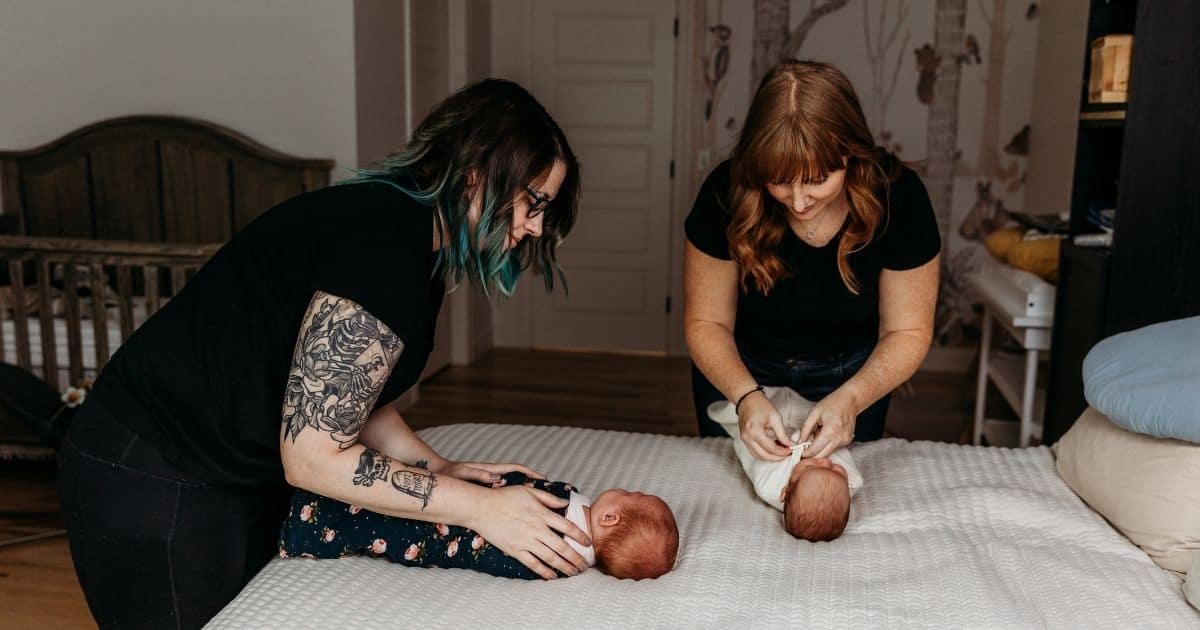
When families learn they’re expecting twins or multiples, conversations about delivery can change quickly. Because multiples arrive early more often and positioning can be unpredictable, many parents plan for a cesarean birth from the start.
For some families, that plan feels grounding. For others, it can bring a mix of emotions. Either way, what matters most isn’t just how your babies arrive; it’s how you’re supported once they’re here.
Recovering from a C-section while caring for twins is one of the most physically and logistically demanding transitions we see providing in-home newborn care, but one of the biggest surprises for families is often that the early weeks after a cesarean with twins aren’t just focused on managing newborn care. They’re about balancing healing, feeding, sleep, and household demands all at once.
We work with hundreds of families in their homes every year, and many of them are having twins! Our goal is to help families feel supported and educated so they can feel more rested and more confident in their parenting.
Why Recovery Looks Different With Twins
A cesarean birth is major abdominal surgery. Your body needs time, rest, and consistency to heal. At the same time, newborn twins bring unique needs for feeding, soothing, diapering, and settling, often happening at the same time.
What we often see in the first weeks after a C-section with multiples is that parents aren’t just navigating recovery or newborn care. They’re navigating both, simultaneously, often while trying to protect sleep and maintain some sense of rhythm at home.
In those early weeks, this can look like:
- Needing to limit lifting while still caring for two babies
- Moving more slowly while babies’ needs move quickly
- Trying to rest between feeds that come around sooner than expected
- Managing physical recovery alongside emotional adjustment
Because so much is happening at once during this period, many families find that extra support in the first weeks makes a meaningful difference in how recovery unfolds.
Feeding Twins While Recovering From Surgery
Feeding is often the primary concern during the early weeks with twins and can quickly become one of the most physically demanding parts of newborn care after a C-section.
Whether families are breastfeeding, pumping, formula-feeding, or using a combination approach, coordinating feeds while recovering from surgery can feel physically demanding, as even simple movements like sitting up, repositioning, or lifting a baby can require more effort as your body heals.
Many C-section parents are navigating:
- Finding comfortable positions that don’t strain incision sites
- Lifting and repositioning babies carefully
- More frequent feeding sessions (or cluster feeding) while babies build stamina
- Common challenges like reflux and bottle refusal
In the homes we support, what we see helps most is layered support during feeds, which often includes:
- A recovering parent focuses on feeding while someone else brings the babies to them
- One baby is burped and settled while the other continues feeding
- Bottles or pump parts are prepped and cleaned without the recovering parent needing to move
These small adjustments protect healing and keep feeds feeling manageable without disrupting feeding rhythms.
Families navigating breastfeeding specifically may also find our guide on How to Navigate Nursing Twins helpful.
Sleep and Recovery in the First Weeks
Sleep is one of the most important parts of recovery after a cesarean, and one of the hardest to come by with twins.
In the early weeks, newborn sleep is naturally fragmented. Babies wake frequently to eat, and their sleep cycles are still developing. With multiples, it’s common for wake-ups to stagger, leaving parents feeling like they’re always “on.”
What we often help families do early on is shift from reacting moment to moment to creating enough coordination that nights feel more manageable by addressing common sleep challenges and aiming to keep babies close enough in rhythm that parents aren’t awake constantly.
This doesn’t mean forcing strict schedules, but instead typically includes:
- Feeding both babies within the same general window
- Gently waking one baby within a reasonable timeframe when the other is ready to eat
- Supporting babies back to sleep calmly and consistently to keep timing coordinated
Over time, these small patterns can help nights feel more manageable and avoid a full night of back-to-back wake cycles.
How Professional Support Helps with Twins During C-Section Recovery
When families bring in professional newborn support during this time, the goal isn’t to take over parenting. It’s to reduce the physical and emotional load while recovery is happening.
In homes we support, this often looks like:
- A Newborn Care Specialist handling overnight care so parents can sleep
- Supporting one or both babies during feeds so parents aren’t physically overextended
- Watching patterns across both babies and making small adjustments over time
- Helping create a rhythm to the day (like a gentle “eat, play, sleep” routine) so everything doesn’t feel reactive
- Bringing pump parts into a recovering parent so they don’t have to get out of bed during the night
What we see consistently is that when recovery is protected early, parents feel more confident, less overwhelmed, and better able to enjoy time with their babies. For some families, this extends into [24-hour newborn care], where support is layered across both day and night while recovery is most intensive. What changes isn’t just sleep; it’s how the entire household functions and feels.
Planning Support Before Twins Arrive
Many families plan extensively for birth, but wait to make decisions about support until after the babies arrive. What we see, though, is that planning earlier often gives families more flexibility.
Especially with twins and a C-section recovery, waiting often means making decisions while already depleted. When care is arranged ahead of time, parents can focus on birth and recovery knowing that help will be there once they return home.
Planning ahead doesn’t mean assuming something will go wrong. It means recognizing that this is a season where support can make a meaningful difference.
Having support in place allows families to move through that season with more rest and less pressure. When support is in place early, families often describe that:
- Recovery is more protected
- Feeding feels more manageable
- Sleep is less fragmented
- The overall transition feels steadier
Final Thought
Recovering from a cesarean birth while caring for twins is a significant transition. It asks a lot of your body, your energy, and your attention all at once.
With the right support, families can focus on healing, bonding with their babies, and settling into life with multiples rather than simply pushing through exhaustion.
If you’re expecting twins or multiples and want to talk through what postpartum support could look like for your family, our team is here to help you explore options that support both recovery and newborn care.
Frequently Asked Questions:
Do most parents of twins have a C-section?
Many twins are delivered by cesarean, though it depends on positioning, gestational age, and medical factors. Your provider can help you understand what’s most likely for your pregnancy.
How long does recovery from a C-section typically take?
Initial healing often takes several weeks, though full recovery can take longer. Rest, sleep, and support all play an important role in the process.
Is it harder to recover from a C-section when you have twins?
Recovery can feel more demanding because parents are caring for two newborns while healing from surgery. Many families find additional support especially helpful during this period.
What kind of help is most useful after a C-section with twins?
Support with overnight care, feeding assistance, and newborn routines can reduce physical strain and help parents focus on recovery and bonding.
When should we plan for support if we’re expecting twins?
Many families find it helpful to plan during pregnancy, so support is in place before recovery and newborn care begin.

Helpful tips from your team at Well Supported Family.
Expert postpartum and newborn advice you can trust.
Since 2016, Well Supported Family has walked alongside thousands of new parents as they adjust to life with a newborn. Our certified Postpartum Doulas and Newborn Care Specialists offer daytime, overnight, and 24/7 in-home care across the United States, bringing steady, knowledgeable support right to your door. If you’re recovering from birth, navigating feeding, or simply overwhelmed by the lack of sleep, we’re here to make those early days feel a little lighter.
Want to explore in-home care for your new family? Reach out today.