
AAP Safe Sleep Guidelines [And How Overnight Care Supports Them]
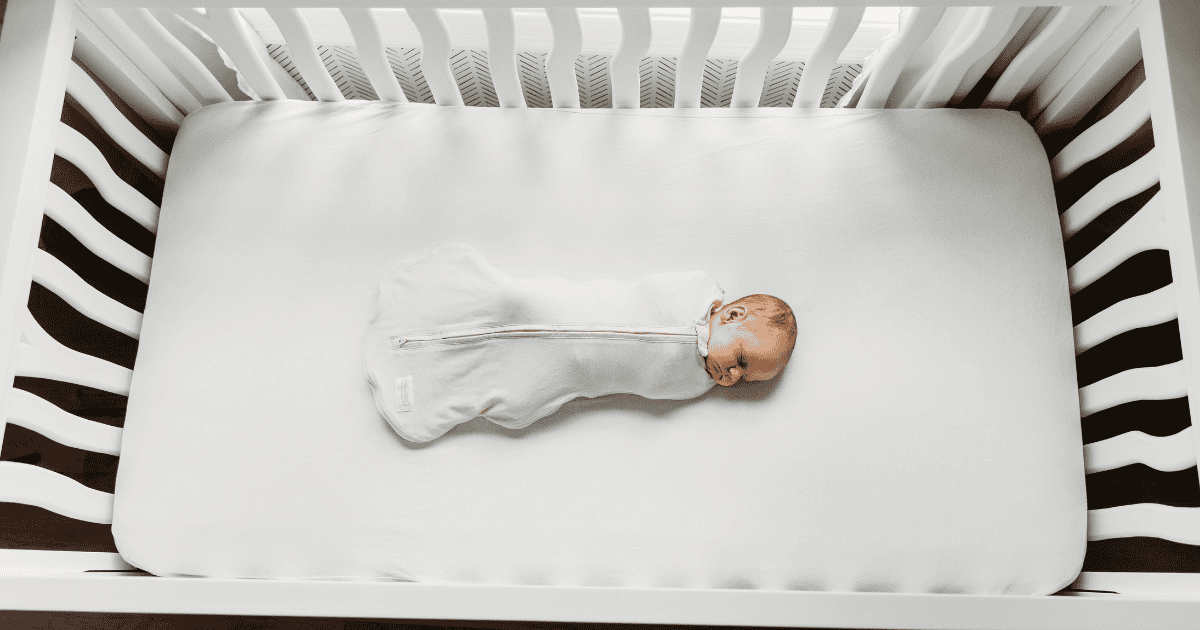
At Well Supported Family, ensuring a safe sleep environment for the babies that we support overnight is our top priority. The American Academy of Pediatrics (AAP) has established clear guidelines to help parents and caregivers create a safe sleep setup for little ones.
In this blog post, we'll share how our team of Newborn Care Specialists and Postpartum Doulas implements safe sleep practices while providing professional overnight support, and how parents can keep their babies safe in their care as well.
What are the AAP Guidelines for Safe Sleep?
The AAP Safe Sleep Guidelines [policy updated June 21, 2022] are recommendations developed by a group of American pediatricians with the goal of reducing the risk of SIDS and crib-related deaths, and keeping babies as safe as possible.
These guidelines are based on years of research and data, and are widely considered the standard for safe infant sleep practices in the United States.
ABCs of Safe Sleep
First, it's important to remember the ABCs of safe sleep:
Alone
Babies should always sleep alone, without any other people, pets, or soft bedding in their sleep area. Bed-sharing and co-sleeping with parents or siblings increases the risk of Sudden Infant Death Syndrome (SIDS) and other sleep-related deaths. Babies should sleep in their own crib, bassinet, or portable play yard, positioned next to a caregiver's bed for the first 6 months. This includes not having a burp cloth or any loose items in the sleep space besides a pacifier.
If parents make the personal choice to bedshare, we've put together some recommendations to keep the baby as safe as possible.
Back
Infants should be placed to sleep on their backs, not on their stomachs or sides. A baby sleeping on their back has been shown to significantly reduce the risk of SIDS compared to other sleep positions. It's important that the sleep surface is flat and level, without any inclines or angles that could cause the baby to roll into an unsafe position. This includes all positioners.
Crib
Babies should sleep in a safety-approved crib, bassinet, or portable play yard with a firm, flat mattress and a fitted sheet. The sleep area should be free of any soft bedding, pillows, blankets, toys, or other objects that could pose a suffocation or entrapment hazard. The crib should meet current safety standards set by the Consumer Product Safety Commission.
By following the AAP's ABCs of safe sleep - Alone, on the Back, in a safe Crib - caregivers can help create the safest possible sleep environment for their newborns and infants. Adhering to these guidelines is one of the most effective ways to reduce the risk of SIDS and other sleep-related deaths.
Other Safe Sleep Factors
The ABC's of Safe Sleep are essential, but there are additional factors that go into safe sleep and reducing the risk of SIDS:
- Room temperature: The recommended room temperature for safe sleep is 68-72° F and keep the baby in temperature appropriate clothing. Overheating can increase the risk of SIDS.
- Air circulation: Researchers believe that air ventilation can reduce the risk of SIDS by reducing the amount of trapped carbon dioxide near an infant's nose and mouth. Running a fan in an infant's room has been shown to reduce the risk of SIDS by 72%.
- Breastfeeding: Studies have demonstrated that infants who are breastfed or fed human milk are at a reduced risk of SIDS. [However, please note that Well Supported Family supports however you choose to feed your baby!]
- Using a pacifier: The sucking motion of a pacifier has been shown to significantly reduce the risk of SIDS-related death.
- Room Sharing: Sharing a room but not a sleep surface for the first 6 months is also recommended. The AAP used to recommend the first year, but sleep outcomes were significantly impacted for both parents and babies.
- Second and Third Hand Smoke: Not smoking around a baby and making sure that caregivers are wearing smoke-free clothing is extremely important. In addition to SIDS, smoke exposure is also linked to asthma, heart disease, and other concerning health conditions.
- Weighted Sleep Sacks: Sleep sacks with weight on the chest are no longer recommended by the AAP. However, standard sleep sacks or swaddles made with heavier fabric [such as higher TOG-rated options] are considered safe, as long as they do not contain added weight and fit appropriately.
- Swaddling: Stop swaddling immediately when the baby begins to show signs of rolling from back to front.
- Monitors: AAP currently doesn't recommend heart rate or breathing monitors.
How We Follow AAP Safe Sleep with Overnight Newborn Care
Safe sleep and healthy sleep habits go hand in hand. The Well Supported Family team is dedicated to implementing both with your newborn. Our team of Newborn Care Specialists and Postpartum Doulas RNs and LPNs are all trained to help your baby learn to sleep independently in a safe environment as advised by the American Academy of Pediatrics. On overnights and 24/7 live-in care, we ask that families support us in the following so we can best ensure a safe sleep environment for their babies.
If a family working with our agency requests that we deviate from any AAP Safe Sleep Guidelines, we will carefully review the request. If it is deemed appropriate and the team member feels comfortable proceeding, the family will be asked to sign a Safe Sleep Waiver before care continues.
Room sharing:
The AAP strongly encourages room sharing for at least the first 6 months of life. This recommendation has been shown to reduce the risk of SIDS. However, room sharing has been statistically shown to mean less sleep for parents. That’s where the Well Supported Family comes in! While we can use a baby monitor while your baby sleeps[with a waiver], we prefer to room-share with your little one. This helps us to best learn their unique cues and keep a close eye on them while you sleep soundly.
We ask for a flat resting surface for the team member [bed, couch, cot, aerobed] in the same room as the baby's safe sleep surface [crib, bassinet, pack 'n play].
Safe sleep environment:
Our Newborn Care Specialists are trained to ensure that the baby's sleep environment meets all AAP safe sleep guidelines. Team members encourage parents to keep the room cool [68°F-72°F] and not to overdress their baby. In most cases, this means one layer [like footed pajamas] and a snug swaddle. Please advise your team member on how to adjust any fans or thermostats as needed. They might need to tweak the temperature throughout the night to be within safe limits.
We also always make sure that there’s nothing in the crib except a tightly fitted sheet and a pacifier. And speaking of swaddles, we are expert swaddlers! We make sure the swaddle blanket is snug but not too tight, and that it doesn't cover the baby's face.
Breastfeeding Support
We support all feeding choices. However, if breastfeeding and/or feeding expressed milk is a goal for your family, our Newborn Care Specialists and Postpartum Doulas are trained and equipped to support you every step of the way.
Our team can provide physical comfort measures, practical guidance for both nursing and pumping, and warm, nonjudgmental encouragement as you navigate your feeding journey. We also monitor for any challenges and can identify when a higher level of support [such as an IBCLC] may be beneficial.
We have found that parents who have in-home support have better breastfeeding outcomes because they are able to fully rest in between feedings and have support, encouragement and advice at their fingertips.
Milestones:
Our team helps parents prepare for important milestones, such as learning to roll. They can help ease your baby out of an arms-in swaddle so that the transition is as smooth as possible, ensuring safety while minimizing disruptions to your baby's sleep routine. We can also help fully wean your baby off the swaddle once they show signs of learning to roll.
Products:
Your Newborn Care Specialist can help you understand if a product is currently considered safe for infant sleep. If you're unsure, always ask! Product recommendations and safe guidelines are not set in stone. What worked for your first baby may now not be considered safe for your next baby.
Common Safe Sleep Questions Parents Ask
If you're unsure how overnight newborn care will look, or how we can best support your family, please always ask! We're here to help. The following safe sleep questions come up often with new families in the early stages of researching professional overnight newborn care options:
What are the AAP's guidelines for safe sleep?
At what age is SIDS no longer a risk?
What is the safest sleep for a newborn?
Can I breastfeed with overnight newborn care?
Alternatively, if you'd prefer privacy, we can head back out to the nursery to tidy up and take notes, and you can send her a text when your baby is finished nursing.
Can I room share with overnight newborn care?
Many parents room share with their babies on their nights "off", while your Newborn Care Specialist room shares with the baby on the nights they are with you. Parents sometimes wonder if this will confuse the baby or affect sleep routines, but we don't see this to be the case.
My baby has acid reflux. Can I use an inclined crib?
If your pediatrician has advised an inclined sleep surface, we can do so only if the team member is comfortable AND the parents sign a waiver releasing the team member of liability.
The recommended temperature range of 68-72° F does not match my cultural beliefs. Can I keep my baby's room warmer than this range?
Can I use a weighted swaddle, Owlet smart sock, or Dock-a-Tot?
**It's extremely important that we know about these details before we match you with a caregiver**[on your discovery call and/or on your intake form]. We cannot ask team members to use products that are not considered safe for sleep, and we cannot re-match your family last minute due to an unsafe product preference.
When Families Need Extra Overnight Support
When babies are put to sleep safely, everyone can rest easier, but knowing what’s truly safe [and what isn’t] can feel overwhelming, especially when guidance seems to change.
You don’t have to figure this out alone.
At Well Supported Family, our Newborn Care Specialists and Postpartum Doulas are trained in current AAP safe sleep guidelines and bring real, hands-on experience into your home each night. We don’t just explain safe sleep, we help you implement it in a way that works for your baby and your family.
Whether you’re feeling unsure about safe sleep, struggling with overnight wake-ups, or simply needing rest, we’re here to support you with calm, knowledgeable care you can trust.
If you’re feeling exhausted or want extra support overnight, you can learn more about our overnight care here, or simply reach out today to set up a time to chat!

Helpful tips from your team at Well Supported Family.
Expert postpartum and newborn advice you can trust.
Since 2016, Well Supported Family has walked alongside thousands of new parents as they adjust to life with a newborn. Our certified Postpartum Doulas and Newborn Care Specialists offer daytime, overnight, and 24/7 in-home care across the United States, bringing steady, knowledgeable support right to your door. If you’re recovering from birth, navigating feeding, or simply overwhelmed by the lack of sleep, we’re here to make those early days feel a little lighter.
Want to explore in-home care for your new family? Reach out today.