
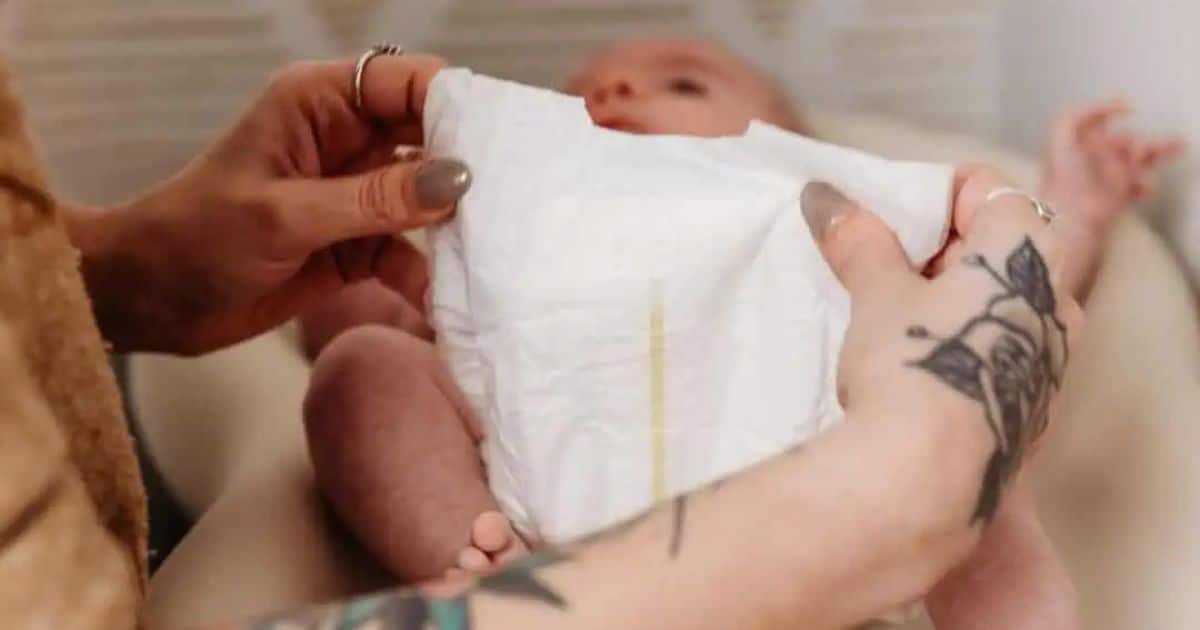
If there’s one thing you can’t live without as new parents, it’s probably diapers! And to help you make sure you don’t overbuy the wrong size at your baby shower or try to squeeze your baby into too-tight diapers, here’s our diaper size guide.
There’s really no way around it, your baby is going to need them and they are going to confuse you. It should be simple, there are sizes for each diaper brand, and they should correspond with your baby’s age, right? RIGHT? Maybe not. Each diaper brand is a little different, though most do tend to go by weight.
How to decide between cloth diapers & disposable
If you’re deciding between cloth diapers or disposable, it is important to note that disposable diapers can be more uniform, whereas cloth diapers tend to vary.
Cloth Diaper Guide:
- One Size Diapers: These diapers are designed to be worn from newborn to potty training. These have snaps or velcro that adjust to your baby’s growing body.
- Newborn: These diapers are created for the smallest of babies, those in the four to 12-pound weight range. The issue with newborn diapers is they’ll be outgrown very fast. Many parents find them too expensive to buy, which is why they opt for pre-folds or short anti-leak inserts with a small-sized pocket diaper. Investing in newborn diapers makes sense for preemies and very tiny babies.
- Small: For most brands, this size is meant to fit babies that weigh 10 to 17 pounds (as you can see, there’s some overlap with the newborn size, allowing you to skip the first one if your child has a higher birth weight).
- Medium: This size is typically suitable for kids in the 17 to 27-pound weight range.
- Large: While there are some variations, large diapers are designed for children in the 27 to 35+ pounds weight range.
Disposable Diaper Size Chart:
- Preemie: Under 6 pounds
- Newborn: Up to 10 pounds
- Size 1: 8-14 pounds
- Size 2: 12-18 pounds
- Size 3: 16-28 pounds
- Size 4: 22-37 pounds
- Size 5: 35+ pounds
An important thing to note is that though the guides specify a weight, some brands of disposable diapers may seem larger or smaller than others. A Millie Moon size 1 may seem larger than a Coterie size 1 and so on and so forth. We recommend getting a variety of different diapers and sizes to begin with (diaper lottery at the baby shower, anyone?), as many babies have preferences towards one brand over another.
When should I move my baby up to a larger diaper size?
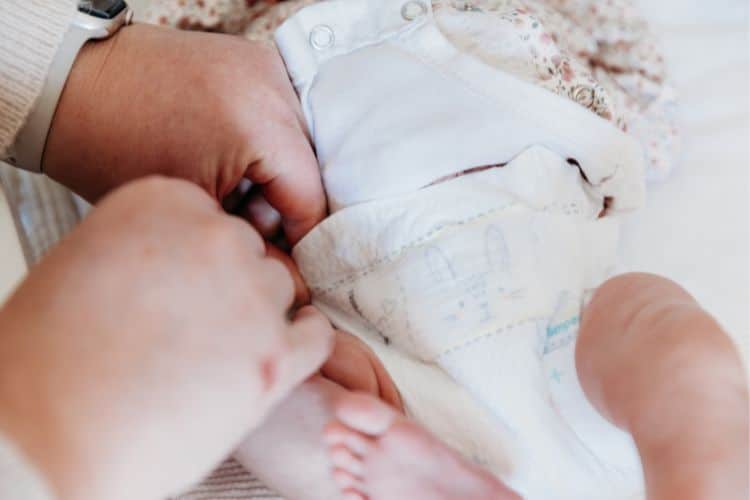
When it’s time to move up a size in diapers is largely determined by your baby’s individual growth. Where one two-month-old may need to size up, another may stay in the same size longer. Signs it’s time to change diaper sizes are:
- if your baby is having frequent blowouts or urine leaking out of the diaper,
- peeing through the diaper and onto clothing,
- the diaper fastening closer to the edges than the middle,
- the top of the diaper being lower than the belly button and
- red markings on your babes legs.
If you aren’t sure if it’s time to size up your diaper, have no fear. You can always ask your professionals at Well Supported Family.

Helpful tips from your team at Well Supported Family.
Expert postpartum and newborn advice you can trust.
Since 2016, Well Supported Family has walked alongside thousands of new parents as they adjust to life with a newborn. Our certified Postpartum Doulas and Newborn Care Specialists offer daytime, overnight, and 24/7 in-home care across the United States, bringing steady, knowledgeable support right to your door. If you’re recovering from birth, navigating feeding, or simply overwhelmed by the lack of sleep, we’re here to make those early days feel a little lighter.
Want to explore in-home care for your new family? Reach out today.