

If you’re worried about your milk supply, you’re not alone. One of the most common concerns we hear from new parents is, “Am I making enough milk?” Here is a comprehensive guide on how to increase your milk supply.
Whether you’re breastfeeding, chestfeeding, exclusively pumping, or using a combination of feeding methods, it can be stressful when you’re trying to increase your supply, and heartbreaking when nothing seems to be working.
The encouraging news is that milk production works on a simple principle: your body makes more milk when more milk is removed. This is the baseline of supply and demand. Understanding how to work with supply and demand can help you build and maintain your supply.
It’s important to remember that even when you’re struggling, you’re still doing an amazing job. It can often be challenging not to measure your worth in ounces when you’re choosing to produce milk to feed your child, but it’s not always as seamless or easy as we are led to believe. It’s okay to struggle, and it’s okay to ask for help.
If You’re Breastfeeding or Chestfeeding
What is breastfeeding or chestfeeding? Breastfeeding [or nursing] directly from the breast is when the birth parent primarily brings the baby to their breast and nipple to encourage them to eat from their body.
*Chestfeeding is a term some parents use that better aligns with their gender identity while describing feeding a baby from their chest, please know we might use terms interchangeably.*
Good news! Your baby is designed to be extremely effective at removing milk from your body! Their suckling stimulates the release of prolactin and oxytocin, the hormones responsible for making and releasing milk. Their saliva is also magic and lets your body know what they need, if they’re sick or going through something. Your milk is designed to adapt to their needs. Cool, right?
If your baby is latching well and transferring milk effectively, one of the best ways to increase your supply is to:
- Offer the breast frequently, following your baby’s feeding cues.
- Allow your baby to finish the first side before offering the second.
- Encourage skin-to-skin contact, which can support milk ejection and encourage frequent feeding.
- Try to maintain a schedule that stays the same each day, though being a few minutes early or late won’t ruin your supply!
Signs of Effective Latching:
- Wide mouth and flanged lips covering nipple/areola.
- The baby’s chin should be firmly against the breast/chest with the nose clear.
- The baby’s cheeks should be rounded and full while eating, not sucking in.
- You should be able to hear them swallowing and see their ears wiggling as they suckle.
- You shouldn’t feel any sharp pain or pinching.
- When your baby is done eating, your nipple should have the same shape as usual, and your baby should seem content.
If you notice any of these things seem to be a struggle for your little one, or you’re having pain while feeding, reaching out to a Lactation Consultant can help troubleshoot any issues. Lactation Consultants are trained to help make sure you and your little one are supported physically in terms of breast or chestfeeding.
Pump After Feeding
Once your baby has finished nursing, add a pumping session for about 10–20 minutes.
Even if you only collect a small amount, or nothing at all, that pumping session is still accomplishing something important. Your body interprets the extra stimulation as increased demand and begins working to produce more milk over the next several days. Though it can be frustrating to see a small amount of milk, or nothing, you should see an increase in the overall supply after a few days.
Many parents can become discouraged when they only pump half an ounce after nursing. Remember:
- Pump output is not a measure of your total milk supply.
- Your baby has likely already removed a significant amount of milk.
- The purpose of pumping after a feeding is often stimulation, not storage.
- You and your body are learning a new skill, and just like learning to ride a bike, it takes time and a few methods to get where you want to be.
Think of it as placing an order for tomorrow’s milk.
If You’re Exclusively or Primarily Pumping
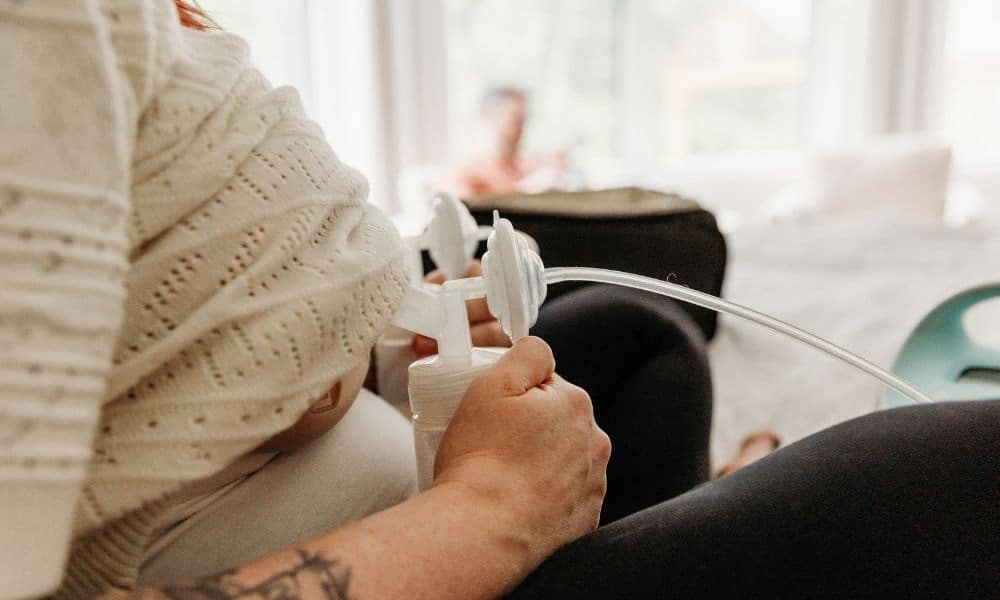
If you’re pumping most or all of your baby’s milk, your pump becomes the signal your body relies on to know how much milk to make. Having the right pump, flanges, and schedule can make a huge impact on your supply.
To increase supply, focus on both frequency and effective milk removal.
Helpful strategies include:
- Pump every 2–3 hours during the day, aiming for about 8–10 pumping sessions in 24 hours if you’re establishing or increasing supply.
- Avoid regularly going long stretches without pumping, especially during the early weeks. This does sadly mean still waking up overnight to pump until your supply is established.
- Pump until milk flow has slowed, then continue for a few additional minutes to provide extra stimulation.
- Hand express by gently massaging and compressing your breasts or chest while pumping to encourage more complete milk removal.
- Make sure your flange size fits properly, and your pump is functioning effectively.
- Replace pump parts as recommended by the manufacturer, as worn valves and membranes can reduce suction and milk removal.
- Try a hand pump after using your primary pump if you still feel full to help remove those stubborn bits!
- Use pump lubricant or nipple cream in the flanges to increase your comfort as well as ease of nipple friction.
Consider Power Pumping
Some parents also benefit from “power pumping,” which mimics cluster feeding and can encourage increased production.
An example of a power pumping schedule is:
- Pump for 20 minutes
- Rest for 10 minutes
- Pump for 10 minutes
- Rest for 10 minutes
- Pump for 10 minutes
Doing this once a day for several days may help increase supply for some parents.
Just like with breast and chest feeding, if you’re struggling to figure out flange sizes, having discomfort or having any concerns, Lactation Consultants can help you work out what is best for you.
Lifestyle Habits That Support Milk Production
While frequent and effective milk removal is the foundation of increasing supply, your overall well-being plays an important role, too. Caring for yourself can help support your feeding journey.
Stay Hydrated
You don’t need to force fluids, but drinking frequently and keeping water nearby during feedings or pumping sessions can help you stay comfortably hydrated. We highly recommend getting yourself a cute and fancy water bottle to bring around the house with you.
Eat Enough to Fuel Your Body
Making milk requires energy. Aim for regular meals and snacks that include:
- Protein-rich foods
- Whole grains
- Healthy fats
- Fruits and vegetables
Unfortunately, there’s no magic food that guarantees more milk, but eating enough to meet your body’s needs supports overall health during lactation. It’s easy to forget to feed ourselves when we have a newborn to take care of, but you can’t pour from an empty cup. Prioritizing your food and liquid intake is an important part of creating milk.
Prioritize Rest When You Can
Sleep deprivation doesn’t automatically decrease milk supply, but exhaustion can make feeding and pumping feel much harder to maintain. Accept help when it’s offered, nap when possible, and remember that resting is part of caring for both yourself and your baby.
Having a Newborn Care Specialist or Postpartum Doula overnights can help you get more sleep,even when exclusively breast or chestfeeding.
Reduce Stress Where Possible
Not being stressed when having a newborn, recovering from childbirth, and trying to figure out how to feed your baby can seem impossible. Stress doesn’t usually decrease milk production directly, but it can temporarily make let-down more difficult and make pumping sessions feel less productive.
Before nursing or pumping, try:
- Taking a few slow, relaxing breaths.
- Looking at your baby or photos and videos if you’re apart.
- Listening to calming music or a favorite podcast.
- Applying gentle warmth before pumping to encourage milk flow.
Be Cautious With Supplements
You may have heard about lactation cookies, teas, or herbal supplements. While some families find them helpful, the scientific evidence supporting many popular products is limited, and some herbs may not be appropriate for everyone.
Before starting supplements or medications intended to increase milk supply, speak with a qualified lactation professional or your healthcare provider.
Consistency Is More Important Than Perfection
Milk production usually doesn’t change overnight. It often takes several days of consistent stimulation before you’ll notice an increase. Try not to get discouraged.
Whether you’re nursing, pumping, or combining both, remember:
- Remove milk frequently.
- Eat enough to nourish your body.
- Stay comfortably hydrated.
- Rest whenever possible.
- Reach out for support early if something doesn’t feel right.
Small, consistent changes often produce the biggest results.
When Supply Doesn’t Increase
Sometimes increasing milk removal may not be enough. Medical conditions, hormonal changes, birth experiences, medications, infant oral restrictions, latch difficulties, and other factors can all affect milk production.
If you’ve been trying to increase your supply without seeing improvement, it may be time for personalized support. A feeding plan should be tailored to you, your baby, and your family’s goals.
Books, blogs and social media can offer ideas, but every feeding journey is different. Working with a qualified professional allows you to receive recommendations tailored to your unique situation.
Don’t Spend Another Night Wondering
Milk supply worries don’t keep office hours. They often show up during those quiet overnight feeds when you’re exhausted, questioning everything, and wondering if your baby is getting enough.
At Well Supported Family, our Newborn Care Specialists, Postpartum Doulas, RNs and LPNs have supported thousands of families through the normal ups and downs of feeding newborns. Our team can help troubleshoot common challenges, provide evidence-based guidance, and offer practical overnight support while you build confidence in your feeding journey. We also recognize when something falls outside the range of what’s expected and will always encourage you to connect with the appropriate specialist, such as an IBCLC or your healthcare provider, when additional evaluation or treatment is needed.
Don’t spend another sleepless night searching online or wondering if you’re doing enough. Contact Well Supported Family for expert overnight support. Together, we’ll answer your questions, troubleshoot feeding challenges, and help you build confidence with a plan that’s tailored specifically to you and your baby, because every family deserves support, even at 2 a.m.

Helpful tips from your team at Well Supported Family.
Expert postpartum and newborn advice you can trust.
Since 2016, Well Supported Family has walked alongside thousands of new parents as they adjust to life with a newborn. Our certified Postpartum Doulas and Newborn Care Specialists offer daytime, overnight, and 24/7 in-home care across the United States, bringing steady, knowledgeable support right to your door. If you’re recovering from birth, navigating feeding, or simply overwhelmed by the lack of sleep, we’re here to make those early days feel a little lighter.
Want to explore in-home care for your new family? Reach out today.