
How Many Ounces Should a Newborn Eat? Breastmilk & Formula Guidelines by Age
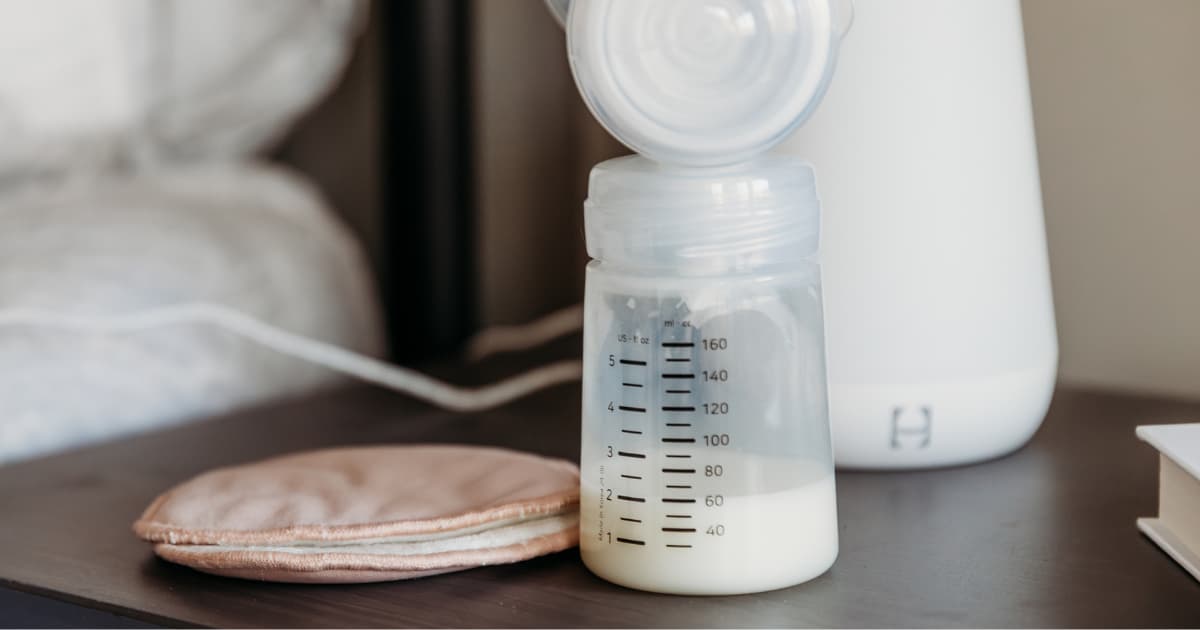
Find out how much breastmilk or formula newborns need per feeding, how intake changes week to week, and signs your baby is getting enough to eat.
Feeding a newborn can feel surprisingly confusing, especially when advice from friends, family, and the internet doesn’t always line up. One person says your baby is eating too often, another worries they aren’t eating enough — and meanwhile, your newborn seems to want to feed around the clock. At Well Supported Family, we’ve helped thousands of families navigate the early weeks of feeding, when counting ounces, hours, and wet diapers can feel like a secret code to unlocking what your baby needs.
The truth is that frequent feeding is normal and closely tied to how small a newborn’s stomach is. Understanding what is typical at each stage — for both breastfeeding and formula-feeding — can help you feel more grounded and confident as you nourish your new baby.
Understanding Newborn Stomach Size
A newborn’s stomach capacity is what dictates how much and how often they will need to eat. It grows very quickly in the first days and weeks of life, so those amounts will change dramatically—from only 1–1½ teaspoons per feeding on day 1, to as many as 5 ounces at 1 month old! A baby’s stomach also fills and empties quickly, and at different rates for breastmilk, formula, and eventually solid food. And when baby has a growth spurt and needs extra calories, their small stomach means they will want to eat round-the-clock.
If you’re curious why newborn feeding volumes start so small, take a look at our guide to newborn stomach size. It explains how your baby’s stomach grows in the first days and weeks—and why frequent feeds are normal in the early weeks.
But how do I know if MY baby is eating enough?
Just like with most recommendations for newborn care, there is a range of how much is considered “normal” for a baby to eat. Your two-week-old may be full after two ounces, while someone else’s two-week-old may easily devour three. So how do you know which is right for YOUR baby?
Hunger and Fullness Cues to Watch For
Newborns are not counting ounces or minutes since their last meal – they listen to their bodies and tell you when they are hungry or full. Hungry babies will stick out their tongues, turn their heads while opening their mouths (rooting), and suck on their hands. Very hungry babies will cry and clench their fists.
Signs that a baby has had enough can include relaxed hands, a slower or weaker suck, turning away from the nipple, or falling into a calm, content state. Because babies regulate their intake based on stomach capacity and comfort, finishing a bottle isn’t always the goal.
More ways to know if your baby is getting enough to eat
Hunger and fullness cues may be hard to interpret, so babies give us a few other cues that they’re getting plenty to eat:
- Steady weight gain. Most newborns lose up to about 10% of their birth weight in the first five days of life, then gradually regain it over the next several days. By around day ten, most babies have returned to their original birth weight.
- Enough wet and dirty diapers. A helpful rule of thumb is one wet diaper per day of life (Day 1 = at least 1 wet diaper, Day 2 = at least 2 wet diapers, etc.) through the first week. After that, newborns should have 6–8 wet diapers every day.
- Poop transitions. A newborn’s bowel movements begin as black and sticky. As they begin to eat more and their digestive systems mature, their poop transitions from greenish-brown to yellow.
Can You Overfeed a Newborn?
True overfeeding is rare in babies, since they will usually push away the bottle or nipple when they feel full. However, some newborns have trouble with fast-flowing nipples or a heavy breastmilk let-down. They may gulp or choke on the milk, swallowing air that can lead to gas or belly pain. Babies may also eat too quickly and spit up what looks like the entire feeding!
To slow milk flow when bottle-feeding, try using a smaller-sized or “slow-flow” nipple, paced feedings, or pausing occasionally to help babies recognize when they’re full. When breastfeeding, try a laid-back nursing position or a delayed latch—allow the milk to let down first, then re-latch the baby. Frequent large spit-ups, persistent belly discomfort after feeds, or difficulty latching may require professional assistance, such as from your pediatrician, a lactation consultant, or a Newborn Care Specialist (NCS).

How Much Breastmilk Does a Newborn Need?
Usually, the breastfeeding parent does not measure their baby’s meals in ounces, teaspoons, or mL, but rather in minutes at each breast and in hours between feedings. These times will change as the baby’s stomach grows and as both the baby and the nursing parent get the hang of breastfeeding.
Birth–1 week old
- Frequency: every 1–3 hours, day and night; 8–12 feedings per day
- Duration: Can be 20+ minutes on one or both sides as they learn, taking breaks in between.
- Colostrum, the first milk to be expressed, is highly concentrated, so it’s ok that the baby is only drinking a few teaspoons each feeding
1 week–1 month old
- Frequency: every 2–3 hours, day and night; 8–12 feedings per day
- Duration: Can be 15–20+ minutes on one or both sides.
- Feeding on demand – feeding a baby whenever they show hunger cues, rather than sticking to a strict schedule – is recommended to build and maintain a stable milk supply.
1–3 months old
- Frequency: every 2–3 hours, with longer stretches at night; 6–8 times per day
- Duration: Feeds might become more efficient, 10–15 minutes per side.
- During growth spurts, baby may want to feed constantly (or at least it feels that way).
3–6 months old
- Frequency: every 3–4 hours, with stretches of 4–12 hours at night; 4–6 feedings per day.
- Duration: Shorter, more effective feeds, maybe 10 mins per side.
- Some babies start solid food around 6 months, but breastmilk or formula remains the primary source of nutrition, and feeding patterns remain consistent.
6–9 months old
- Frequency: every 3–4 hours, with stretches of 6–12 hours at night; 4–5 feedings per day.
- Duration: Shorter, more effective feeds, maybe 10 mins per side.
9–12 months old
- Frequency: every 3–4 hours, with stretches of 8–12 hours at night; 3–5 feedings per day.
- Duration: Shorter, more distracted feeds, maybe 5–10 mins per side.
At A Glance: How Much Breastmilk Does a Newborn Need?
Remember: there is always a normal range for every baby at every age.
| Baby’s Age | Feeding Frequency | Duration per feeding |
| Birth–1 week old | Every 1–3 hrs 8–12 feedings per day | 20+ minutes on one or both sides |
| 1 week–1 month old | Every 2–3 hrs 8–12 feedings per day | 15–20+ minutes on one or both sides |
| 1–3 months old | Every 2–3 hrs (longer stretches at night) 6–8 feedings per day | 10–15 minutes per side |
| 3–6 months old | Every 3–4 hrs (longer stretches at night) 4–6 feedings per day | 10 minutes per side |
| 6–9 months old | Every 3–4 hrs (longer stretches at night) 3–5 feedings per day | 10 minutes per side |
| 9–12 months old | Every 3–4 hrs (longer stretches at night) 3–5 feedings per day | 5–10 minutes per side |
How Much Formula Should a Newborn Drink?
Formula digests more slowly than breastmilk, so formula-fed babies often go a bit longer between feeds than breastfed babies, and may take slightly larger volumes at each meal. The American Academy of Pediatrics recommends that, on average, your baby should take in about 2.5 ounces (75 mL) of infant formula per day for every pound (453 g) of body weight. However, babies can vary their intake from day to day and from feeding to feeding to meet their own specific needs. There is a wide range to the “normal” amount of formula that your baby should be drinking:
Birth–1 week old
- Frequency: every 2–3 hours, day and night; 8–12 feedings per day
- Amounts:
- Day 1 (birth–24 hours): Up to ½ ounce (2–10 milliliters)
- Days 2-3: ½–1 ounce (10–20 milliliters)
- Days 4-6: Up to 1 ounce (30 milliliters)
1 week–1 month old
- Frequency: every 2–3 hours, day and night; 8–12 feedings per day
- Amounts:
- Week 1: 1–2 ounces (30–60 milliliters)
- Weeks 2–3: 2–3 ounces (60–90 milliliters)
1–3 months old
- Frequency: Every 2–3 hours; 8–10 feedings per day
- Amount: 3–4 ounces (90–120 milliliters)
- During growth spurts, baby may want to eat constantly (or at least it feels that way).
3–6 months old
- Frequency: Every 3–4 hours; 6–8 feedings per day
- Amount: 4–5 ounces (120–150 milliliters)
- Some babies start solid food around 6 months, but breastmilk or formula remains the primary source of nutrition, and feeding patterns remain consistent.
6–9 months old
- Frequency: Every 3–4 hours; 5–7 feedings per day
- Amount: 4–6 ounces (120–180 milliliters)
9–12 months old
- Frequency: Every 3–4 hours; 4–6 feedings per day
- Amount: 6–8 ounces (180–240 milliliters)
At A Glance: How Much Formula Should a Newborn Drink?
Remember: there is always a normal range for every baby at every age.
| Baby’s Age | Feeding Frequency | Amount per Feeding |
| Birth–24 hrs old | Every 2–3 hrs 8–12 feedings per day | Up to ½ oz 2–10 mL |
| 2–3 days old | Every 2–3 hrs 8–12 feedings per day | ½–1 oz 10–20 mL |
| 4–6 days old | Every 2–3 hrs 8–12 feedings per day | Up to 1 oz 30 mL |
| 1 week old | Every 2–3 hrs 8–12 feedings per day | 1–2 oz 30–60 mL |
| 2–3 weeks old | Every 2–3 hrs 8–12 feedings per day | 2–3 oz 60–90 mL |
| 1–3 months old | Every 2–3 hrs 8–10 feedings per day | 3–4 oz 90–120 mL |
| 3–6 months old | Every 3–4 hrs 6–8 feedings per day | 4–5 oz 120–150 mL |
| 6–9 months old | Every 3–4 hrs 5–7 feedings per day | 4–6 oz 120–180 mL |
| 9–12 months old | Every 3–4 hrs 4–6 feedings per day | 6–8 oz 180–240 mL |
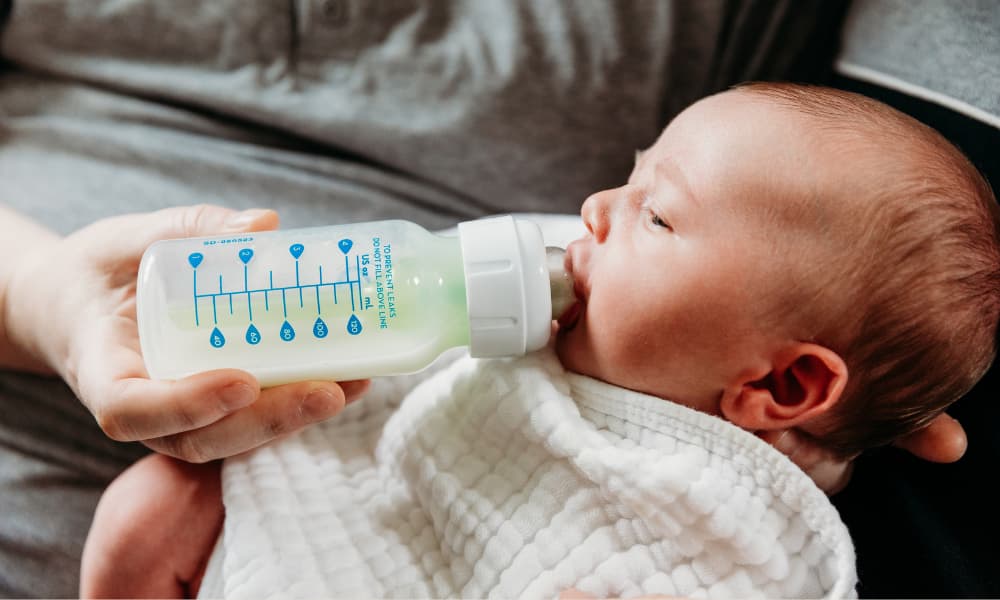
Combination Feeding: Balancing Breastmilk, Pumped Milk, and Formula
Many new parents end up feeding their baby with a combination of breastfeeding, bottle-fed breastmilk, and formula. This adds another level of complexity to knowing how many ounces to put in a bottle, or how long it will be until the baby is hungry again. When setting up your combination-feeding schedule, refer to both the breastfeeding and formula-feeding charts below, and adjust the frequency and amount recommendations based on:
- Baby’s hunger and fullness cues
- Nursing or pumping enough to maintain a stable milk supply
- The family’s work and sleep needs
If you need help balancing all these factors, a Newborn Care Specialist can help set up a sustainable routine for everyone. They bring real-world experience from helping all sorts of families set up systems that work for them.
How a Newborn Care Specialist Can Help
There’s a reality at the center of every feeding chart and guideline: every baby is different, and you won’t know exactly what your baby will need until you meet them. Feeding charts are helpful, but they won’t tell you exactly how your baby wants to be held while eating, or whether to wake them up for the next feeding or let them sleep. An Newborn Care Specialist will bring not only up-to-date, evidence-based training on newborn care and feeding, but also the experience and knowledge cultivated from hundreds of other families.
No matter whether you plan to breastfeed, formula feed, or both, a Newborn Care Specialist can provide hands-on support with feeding volumes, pacing, and recognizing hunger and fullness cues in real time. They help parents understand feeding in the context of a newborn’s stomach size and developmental stage, making frequent feeds feel far more normal and manageable. With calm guidance and reassurance from an expert overnight, many parents experience less anxiety and second-guessing, and gain confidence in meeting their baby’s feeding needs.
FAQs About Newborn Feeding Amounts
How often should a newborn eat?
Most newborns eat every 2–3 hours, though some may feed more frequently during growth spurts or cluster-feeding periods.
Is cluster feeding normal?
Yes – cluster feeding is very common, especially in the evenings and during developmental growth spurts, and helps babies meet calorie needs and support milk supply.
Should I wake my baby to feed?
In the early weeks, babies are often woken every 2–3 hours to feed until they’ve regained birth weight and are gaining well, unless your pediatrician advises otherwise.
What if my baby wants more or less than the chart?
Feeding charts are guidelines, not rules—babies vary, and cues, growth, and diaper output matter more than exact numbers.
How many ounces should a newborn eat per feeding?
In the first days, feeds may be as small as 0.5–1 ounce, increasing to about 2–4 ounces per feeding by 1 month, depending on the baby.
How do I know if my newborn is getting enough milk?
Regular wet diapers, steady weight gain, and a baby who seems satisfied after most feeds are key signs that intake is adequate.
How often should I pump for a newborn?
To establish supply, most parents pump about 8–10 times in 24 hours if exclusively pumping or supplementing, roughly matching a newborn’s feeding pattern.
Should formula-fed babies drink more per feeding than breastfed babies?
Formula-fed babies may take slightly larger, more spaced-out feeds because formula digests more slowly, but total daily intake is often similar.
How do I pace-bottle-feed a newborn?
Hold the baby upright, use a slow-flow nipple, keep the bottle mostly horizontal, and pause frequently to allow the baby to set the pace and show fullness cues.
How can I hire a Well Supported Family team member for hands-on support?
Start with a free discovery call where we’ll learn about your family, your feeding goals, and what kind of support would be most helpful. From there, we match you with a Newborn Care Specialist who fits your needs — whether that’s overnight care, daytime support, or help building a feeding routine that works for your whole family.
Newborn feeding needs vary widely, and flexibility matters far more than hitting exact ounce counts at every feed. Using guidelines for reassurance—while trusting your baby’s cues—can help take the pressure off feeding decisions.
It’s natural to worry about whether your baby is getting enough to eat, and it can help to have an expert close by. Our overnight newborn care can help you in those most confusing early days of newborn life. Their expertise and experience will help you start your parenting journey with confidence. Book a call today and find out how.

Helpful tips from your team at Well Supported Family.
Expert postpartum and newborn advice you can trust.
Since 2016, Well Supported Family has walked alongside thousands of new parents as they adjust to life with a newborn. Our certified Postpartum Doulas and Newborn Care Specialists offer daytime, overnight, and 24/7 in-home care across the United States, bringing steady, knowledgeable support right to your door. If you’re recovering from birth, navigating feeding, or simply overwhelmed by the lack of sleep, we’re here to make those early days feel a little lighter.
Want to explore in-home care for your new family? Reach out today.